
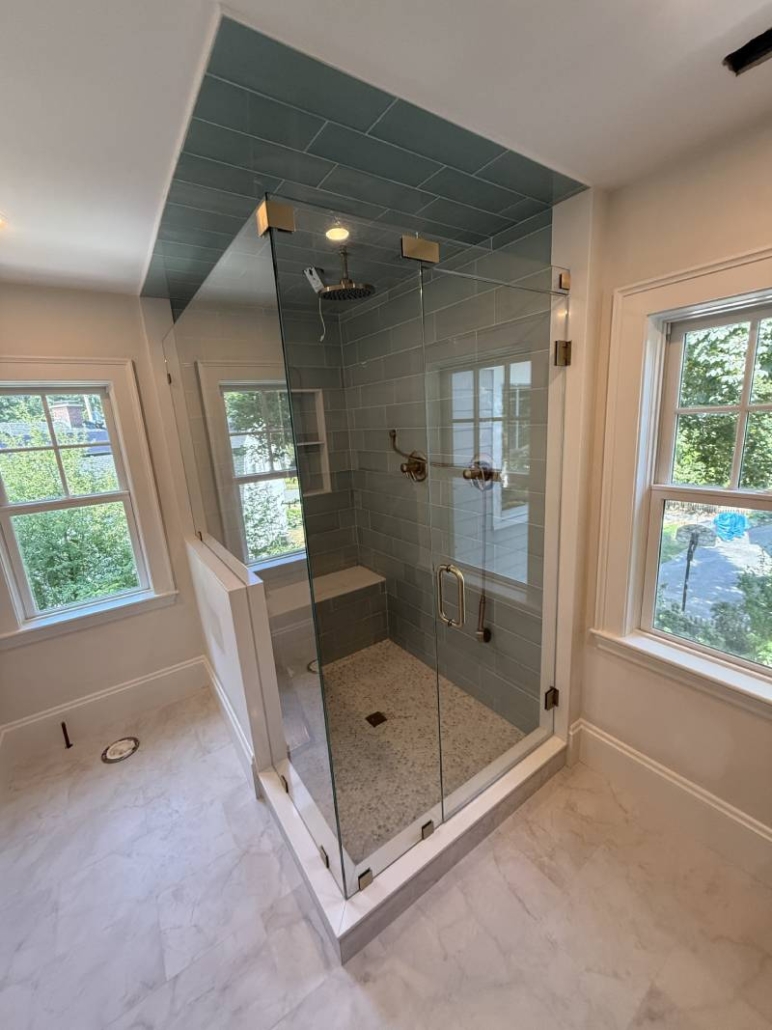
How Thick Should Shower Glass Be? A Homeowner Guide (2026)
If you’re planning a bathroom upgrade, you’ve probably come across different options for shower glass thickness—and wondered:
How thick should shower glass actually be?
It’s a great question, because thickness plays a big role in:
- Durability
- Appearance
- Overall feel of your shower
In this guide, we’ll break down the most common glass thickness options, how they compare, and how to choose what’s right for your space.
Why Shower Glass Thickness Matters
Shower glass isn’t just about looks—it directly impacts how your shower performs.
The thickness of the glass affects:
- Strength and durability
- Stability of the panels and doors
- Overall appearance and weight
Thicker glass generally feels more solid and premium, while thinner glass may require additional support.
Standard Shower Glass Thickness Options
Most residential shower doors fall into three main categories:
1/4-Inch Glass (Framed Showers)
This is the thinnest option and is typically used in fully framed shower doors.
Because the glass is thinner:
- It relies on a full metal frame for support
- It’s more budget-friendly
- It’s commonly found in older or standard installations
This type of glass is rarely used in frameless designs.
3/8-Inch Glass (Most Common Frameless Option)
3/8-inch glass is one of the most popular choices for frameless shower doors.
It offers:
- Strong durability
- A clean, modern look
- A good balance between cost and performance
For many homeowners, this thickness provides everything they need without going into higher-end pricing.
1/2-Inch Glass (Premium Frameless Option)
1/2-inch glass is thicker, heavier, and often considered a more premium option.
It provides:
- A more substantial, high-end feel
- Increased rigidity and stability
- A sleek, frameless appearance with minimal hardware
This option is often chosen for larger showers or homeowners looking for a more elevated design.
3/8 vs 1/2-Inch Glass: What’s the Difference?
Both options work well for frameless shower doors, but there are a few key differences:
| Feature | 3/8-Inch Glass | 1/2-Inch Glass |
|---|---|---|
| Weight | Lighter | Heavier |
| Appearance | Clean and modern | More substantial and premium |
| Cost | More budget-friendly | Higher investment |
| Support Needed | Minimal hardware | Even less visible support needed |
For most standard showers, 3/8-inch glass is more than enough.
For larger or more design-focused spaces, 1/2-inch glass can enhance the overall look and feel.
Is Thicker Glass Always Better?
Not necessarily.
While thicker glass offers a more premium feel, the “best” option depends on your space and goals.
Factors to consider:
- Size of your shower
- Type of layout
- Budget
- Design preference
A properly designed and installed 3/8-inch system can perform just as well as a thicker option in many situations.
What About Frameless Shower Doors?
Frameless shower doors require thicker glass because they don’t rely on a full frame for support.
That’s why:
- 3/8-inch is typically the minimum for frameless designs
- 1/2-inch is used for larger or more custom layouts
This added thickness ensures the glass remains stable and safe during everyday use.
Safety: Is Shower Glass Strong Enough?
Yes—shower glass is designed with safety in mind.
Most shower doors use tempered safety glass, which is:
- Heat-treated for strength
- More durable than standard glass
- Designed to break into smaller, less harmful pieces if damaged
This makes it a safe and reliable choice for residential bathrooms.
How to Choose the Right Glass Thickness
If you’re deciding between options, here’s a simple way to think about it:
Choose 3/8-inch glass if you:
- Want a clean, modern look
- Are working with a standard-sized shower
- Want a balance between cost and quality
Choose 1/2-inch glass if you:
- Have a larger or more open layout
- Want a heavier, more premium feel
- Are prioritizing design and minimal hardware
Does Glass Thickness Affect Cost?
Yes—thicker glass generally costs more.
This is because:
- More material is used
- The glass is heavier to fabricate and install
- Hardware requirements may change
However, the difference is often part of a larger investment in the overall design.
Choosing the Right Shower Glass for Your Space
So, how thick should shower glass be?
For most homeowners:
- 3/8-inch glass is the standard and most practical choice
- 1/2-inch glass offers a more premium, design-focused upgrade
Both options are durable, safe, and effective when installed properly.
Thinking About a Frameless Shower?
If you’re planning a frameless shower door, choosing the right glass thickness is just one part of the process.
The best results come from a design that fits your space, your style, and how you plan to use your bathroom.